
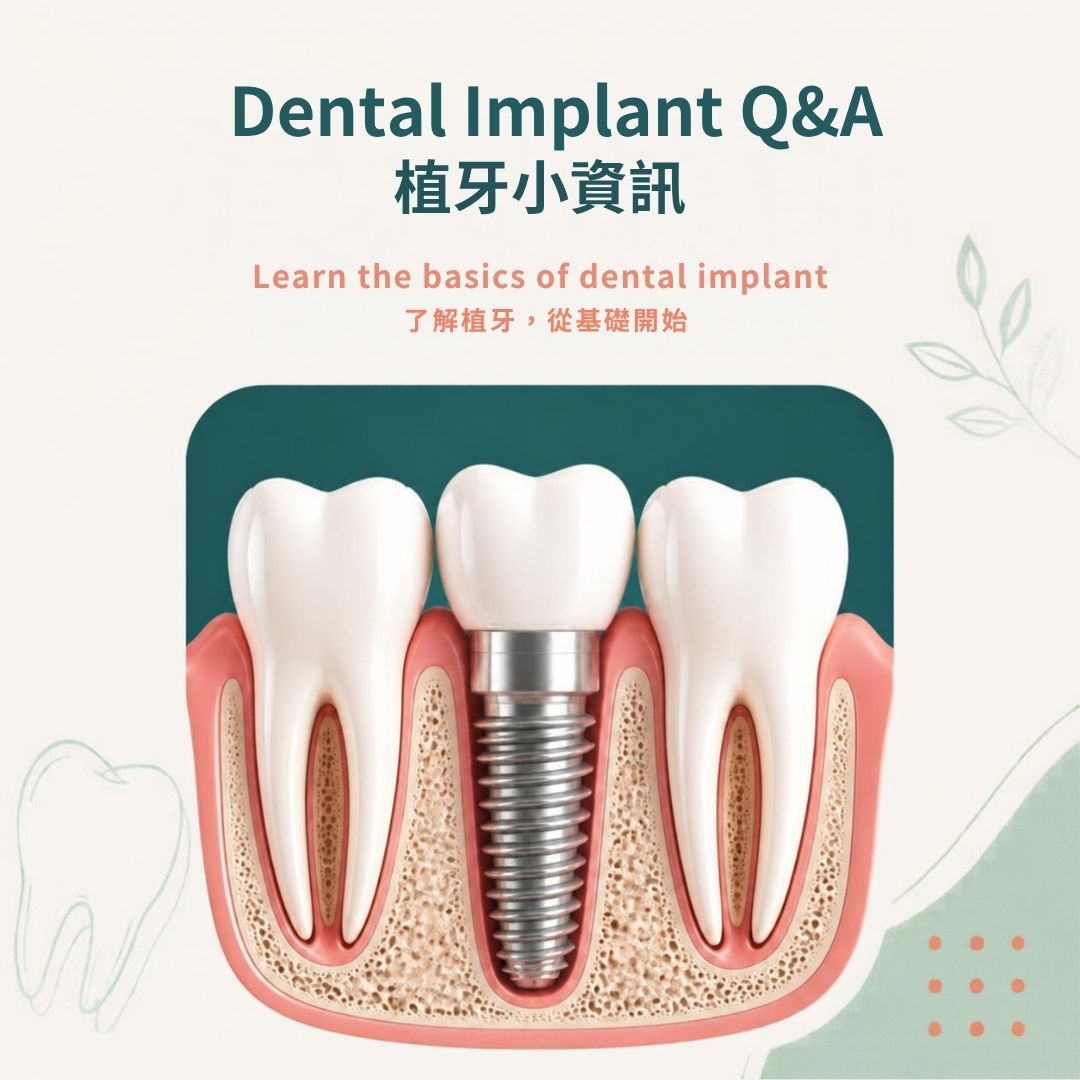
Thinking About Dental Implants?
Missing a tooth can affect how you eat, speak, and feel about your smile. If you are considering dental implants, you may have questions about the treatment process, recovery, bone grafting, surgical options, and long-term care.
Dental implants are one option for replacing missing teeth, but they are not the only option, and treatment is not the same for everyone. A dental examination and assessment of your teeth, gums, jawbone, and bite can help determine which treatment options may be appropriate for you.
In this guide, we answer some common questions patients ask before considering dental implants
考慮植牙?
缺少一隻牙齒可能會影響進食、說話及笑容。如果您正考慮接受植牙(Dental Implants),可能會對植牙的治療過程、康復、骨移植、手術方式及長期護理等方面有不少疑問。
植牙是其中一種修復缺失牙齒的方法,但並不是唯一的選擇,而每位患者的治療方案亦可能有所不同。牙醫會透過牙科檢查,評估您的牙齒、牙齦、顎骨及咬合情況,以了解哪些牙齒修復方案可能適合您。
以下整理了一些患者在考慮植牙前常見的問題,讓您對植牙有更全面的了解。
Dental Implant FAQs
Q1: Does Dental Implant Surgery Hurt? Will I Be Numbed?
Dental implant surgery is performed using local anaesthetic, which numbs the treatment area. During the procedure, patients generally should not feel significant pain.
After surgery, some swelling, soreness, or discomfort may occur. The level of discomfort can vary depending on the extent of the procedure and individual healing. Dentist will provide post-operative instructions and advise you on appropriate pain management and aftercare.
Q2: How Long Do Dental Implants Last?
The lifespan of a dental implant can vary depending on several factors, including oral hygiene, gum and periodontal health, bite forces, implant location, lifestyle factors, and regular dental maintenance.
Good oral hygiene, regular dental examinations, and appropriate implant maintenance can help support the long-term health of the implant and surrounding tissues.
However, dental implants are not guaranteed to last for life. The implant, crown, and other components of the restoration may have different maintenance or replacement needs over time.
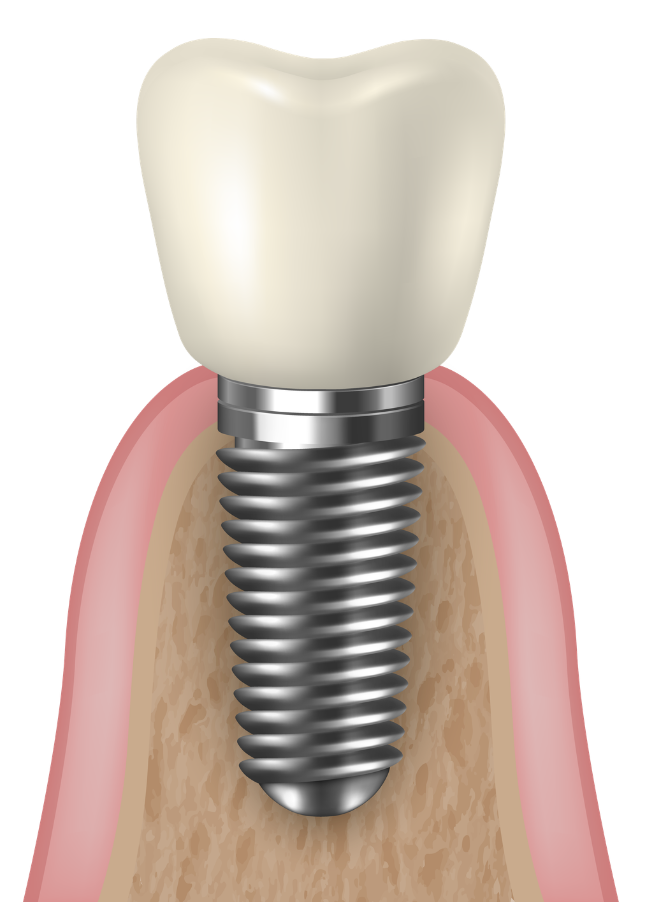
Q3:Can I Get Dental Implants If I Have Gum Disease?
Having gum disease does not necessarily mean you cannot have dental implants.
However, active gum disease or periodontal inflammation may need to be treated and controlled before implant treatment is considered.
Healthy gums and supporting tissues are important for maintaining the health of a dental implant. Poorly controlled periodontal disease may increase the risk of inflammation and bone loss around dental implants.
Your dentist will assess your gums, periodontal health, teeth, and supporting bone and recommend the appropriate treatment sequence based on your individual needs.
Q4: What Types of Dental Implant Surgery Are Available? What Is an Implant Surgical Guide?
Dental implant surgery can be planned in different ways depending on your jawbone condition, the location and number of missing teeth, your bite, and overall oral health.
In addition to conventional implant placement, some patients may be suitable for Guided Implant Surgery.
An Implant Surgical Guide is a custom-made guide created using digital dental scans and 3D CBCT imaging. Your dentist can use this digital information to plan the implant position, angulation, and depth before surgery.
During implant placement, the surgical guide can help guide the implant according to the planned position.
Guided implant surgery may be considered in selected cases, but it is not necessary or suitable for every patient. Your dentist will assess your teeth, gums, jawbone, bite, and individual treatment needs to determine the most appropriate surgical approach.
Q5: Can I Get Dental Implants If I’m Older?
Age alone does not necessarily prevent someone from receiving dental implants.
The more important considerations include your oral health, gum and periodontal health, jawbone condition, bite, general health, and individual treatment needs.
Rather than determining suitability based on age alone, your dentist will assess your overall situation and discuss whether dental implants may be an appropriate option.
Q6: Do Dental Implants Need Special Care?
Although a dental implant itself cannot develop cavities, the gums and supporting tissues around the implant can still become inflamed.
Poor oral hygiene may contribute to inflammation around an implant, including peri-implantitis, which can be associated with bone loss around the implant.
After dental implant treatment, it is important to maintain good oral hygiene, clean around the implant carefully, attend regular dental examinations, and follow your dentist’s recommended implant maintenance schedule.
Dental implants can be an option for replacing missing teeth, but the appropriate treatment depends on each patient’s individual oral health and needs.
If you are considering Dental Implants, contact 太古廣場牙齒美容植牙中心 to arrange a dental examination and implant consultation.
植牙常見問題
Q1:植牙手術會唔會痛?手術時會唔會麻醉?
植牙手術會使用局部麻醉(Local Anaesthetic),讓治療部位麻木,因此手術過程中一般不會感受到明顯疼痛。
手術後可能會出現腫脹、痠痛或不適,程度會因手術範圍及個人的癒合情況而有所不同。牙醫會提供術後護理指引,並根據您的情況建議適當的疼痛管理及護理方法。
Q2:植牙可以用幾耐?
植牙的使用時間會受到多項因素影響,包括口腔衛生、牙齦及牙周健康、咬合力度、植體位置、生活習慣,以及定期牙科檢查及植牙維護等。
保持良好的口腔衛生、定期接受牙科檢查及適當的植牙維護,有助維持植體及周圍組織的長期健康。
不過,植牙並不能保證終身使用。植體、牙冠及其他修復組件的維護或更換需要亦可能有所不同。
Q3:有牙周病仲可以植牙嗎?
有牙周病並不代表一定不能植牙。
不過,如果目前有活躍的牙周病或牙周組織發炎,可能需要先接受適當的牙周治療並控制病情,然後再評估是否適合進行植牙。
健康的牙齦及支持組織對維持植牙的健康十分重要。如果牙周病沒有得到適當控制,可能增加植體周圍發炎及骨流失等問題的風險。
牙醫會評估您的牙齦、牙周健康、牙齒及支持顎骨,並根據您的個別情況建議合適的治療次序。
Q4:植牙手術有什麼不同的方法?什麼是植牙手術導板?
植牙手術可以根據患者的顎骨狀況、缺牙位置及數量、咬合情況,以及整體口腔健康制定不同的治療方案。
除了傳統的植牙手術外,部分患者亦可能適合採用 Guided Implant Surgery|電腦導航植牙。
植牙手術導板(Implant Surgical Guide) 是根據數碼口腔掃描及 3D CBCT 等影像資料製作的個人化導板。牙醫可以利用這些數碼資料,在手術前規劃植體的位置、角度及深度。
進行植牙手術時,手術導板可以協助牙醫按照預先規劃的位置放置植體。
電腦導航植牙適用於部分合適的個案,並不是每位患者都需要或適合使用植牙手術導板。牙醫會評估您的牙齒、牙齦、顎骨、咬合及個別治療需要,從而建議合適的植牙手術方式。
Q5:年紀大,仲可唔可以植牙?
年齡本身並不一定代表不能接受植牙。
較重要的考慮因素包括您的口腔健康、牙齦及牙周狀況、顎骨條件、咬合、整體健康及個人治療需要。
因此,是否適合植牙不能單靠年齡判斷。牙醫會根據您的整體口腔及健康狀況進行評估,並與您討論植牙是否適合您的情況。
Q6:植牙需要特別護理嗎?
雖然植體本身不會蛀牙,但植體周圍的牙齦及支持組織仍然可能出現發炎。
如果口腔衛生不足,植體周圍可能出現發炎,例如植體周圍炎(Peri-Implantitis),並可能伴隨植體周圍的顎骨流失。
植牙完成後,需要保持良好的口腔衛生,仔細清潔植體及周圍位置,定期接受牙科檢查,並按照牙醫的建議進行植牙維護。
考慮植牙?
植牙可以是修復缺失牙齒的一種選擇,但適合的治療方式會因每位患者的口腔健康及個別需要而有所不同。
如果您正考慮植牙,歡迎聯絡 太古廣場牙齒美容植牙中心,預約牙科檢查及植牙諮詢。