
What Is Gum Disease?
Gum disease, also called periodontal disease, is a common condition affecting the gums and other tissues that support your teeth. It is usually caused by bacteria in dental plaque.
Gum disease can range from gingivitis, the early stage of gum disease, to periodontitis, a more advanced form that can damage the tissues and bone supporting your teeth. If left untreated, periodontitis can cause teeth to become loose and may eventually lead to tooth loss.
Gingivitis vs. Periodontitis
Gingivitis is the early stage of gum disease. It can cause gums to become red, swollen, and prone to bleeding, but it does not cause permanent loss of the bone supporting the teeth.
Periodontitis is a more advanced form of gum disease. When left untreated, it can damage the gums and supporting bone, causing teeth to become loose and potentially leading to tooth loss.
Early diagnosis and appropriate periodontal care can help manage gum disease and protect your teeth and gums.
How Is Periodontitis Diagnosed?
During your dental examination, our dental team will assess your gums and the tissues supporting your teeth for signs of gum disease and periodontitis.
A periodontal assessment may include:
- Reviewing your symptoms, dental and medical history, and risk factors such as smoking
- Examining your gums for redness, swelling, bleeding, and other signs of inflammation
- Measuring periodontal pocket depths with a periodontal probe
- Taking dental X-rays when needed to assess the supporting bone and identify possible bone loss
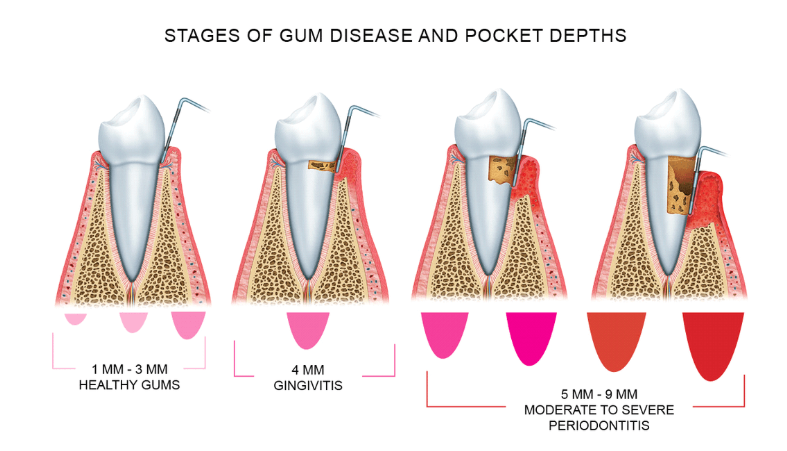
Periodontal disease can be classified into different stages

What Do Periodontal Pocket Measurements Mean?
A periodontal pocket is the space between the gum and the tooth. Your dentist or dental hygienist measures the depth of these pockets in millimetres (mm) using a periodontal probe.
As a general guide:
- 1–3 mm: Typically considered a healthy pocket depth when there is no bleeding or other signs of inflammation
- 4 mm: May indicate early periodontal changes and should be assessed together with bleeding and other clinical findings
- 5 mm or deeper: May indicate more advanced periodontal disease and may require further assessment and treatment
Pocket depth is only one part of a periodontal assessment. Your dentist will also consider bleeding, gum inflammation, bone levels, gum recession, and other clinical findings when evaluating your periodontal health.
Periodontal Treatment
Healthy gums are an important part of a healthy smile. Periodontal treatment helps manage gum disease, improve gum health, and protect the gums and bone that support your teeth.
Depending on your gum health, treatment may range from professional dental cleaning and scaling and root planing (deep cleaning) to periodontal surgery. Our dental team will assess your gums and recommend an appropriate treatment plan based on your individual needs.
Common Periodontal Treatments Include:
Professional Dental Cleaning
Professional dental cleaning removes plaque and tartar above the gumline to help maintain healthy teeth and gums. Gingivitis and mild gum problems can often be managed by a dental hygienist or general dentist. A regular cleaning may not remove deeper tartar below the gumline.
Scaling and Root Planing
Also known as deep cleaning, scaling and root planing removes tartar and bacterial deposits from periodontal pockets and cleans the tooth root surfaces. This can help reduce inflammation and manage gum disease. Local anaesthetic may be used for comfort, depending on the extent of treatment.
Periodontal Surgery
For deeper periodontal pockets, persistent bleeding, loose teeth, or bone defects, periodontal surgery may be recommended when nonsurgical treatment does not adequately control gum disease. Treatment may include flap surgery, gum grafting, or periodontal regenerative procedures to access and treat areas that are difficult to reach with nonsurgical treatment.
Maintaining Your Long-Term Gum Health
Gum disease requires ongoing monitoring and care. Good daily oral hygiene, regular dental examinations, and appropriate periodontal treatment can help manage gum disease, protect your teeth and gums, and support long-term oral health.
If you experience bleeding or swollen gums, deeper periodontal pockets, or other signs of gum disease, contact Pacific Plaza Dental Centre to schedule a periodontal assessment and discuss your treatment options.